Orthodoxy & The Transformation of Marriage | Dr. David Bradshaw
Demosthenes famously remarked in a speech to an audience of Athenian men, “Mistresses we keep for the sake of pleasure, concubines for the daily care of our persons, but wives to bear us legitimate children and to be faithful guardians of our households.” This expresses well the ancient view of marriage as existing primarily for the sake of pooling economic resources and bearing and raising children. Love and companionship were a much lesser goal, and the Christian ideal of spiritual fellowship and mutual aid in seeking God, or whatever might be its pagan equivalent, did not figure at all.
How did Christianity change this understanding of marriage? Obviously biblical teaching about marriage, beginning with the creation account in Genesis and culminating with St. Paul’s profound reflections in Ephesians 5, played a critical role. Here I will focus on two other factors that are less frequently noticed: monasticism and the veneration of the Theotokos. Understanding how these worked together to change the way that men and women thought about one another, and thereby also what they saw as the proper role of marriage, can take us a long way toward achieving a properly Orthodox understanding of marriage.
Vigen Guroian has long been one of the most profound Orthodox exponents of the meaning of marriage. His exposition stretches across his early Incarnate Love and his later The Orthodox Reality. Yet it would be hard for any author, however insightful, to fully exhaust this rich subject. I will begin by briefly contrasting Guroian’s treatment with that of another contemporary Orthodox theologian so as to highlight the distinctive priorities and concerns of each. Taking this contrast as my starting point, I will suggest that a fruitful synthesis between them can be found by understanding how the meaning of marriage has shifted from ancient to modern times, including how Orthodoxy itself contributed to this transformation.
Guroian begins—as any Christian surely must—with the creation account in Genesis. From Genesis we learn that “marriage is founded in a sexual love that, when not deviant, aspires toward perfect union with the other.” Such union with the other is “the primary good of marriage.” This does not mean that marriage is an end in itself, however; on the contrary, it is “an eschatological commitment and venture in faith” that aims to prepare the married couple, and the “little church” they create, for the Kingdom of God. Male and female are the “elements and symbols of transformation” in the sacrament of marriage, much as bread and wine are in the Eucharist. To welcome children as a blessing from God is an integral part of this sacramental transformation. Guroian has much to say about parenthood and childhood as essential dimensions of Christian marriage. He highlights the role these practices play, not only in realizing the fecundity of marriage, but in enabling growth in spiritual maturity and the formation of a familial community centered around the love of God. He also offers a vigorous critique of trends in contemporary culture that work against these commitments, including the campus hook-up culture, same-sex marriage, and the general de-Christianization of contemporary society.
A markedly different approach is taken by Fr. John Behr. More than Guroian, Behr emphasizes that marriage is like monasticism in that it is a way of realizing “the fundamental Christian vocation of martyrdom.” So far this might be taken as merely a difference of emphasis, for Guroian certainly recognizes that marriage often requires great sacrifice. But its true meaning becomes clear in their respective treatments of sexuality. Behr argues that one becomes fully human only through a life lived martyrically for Christ. He interprets this conclusion in a way that sharply juxtaposes sexual reproduction with true human identity: “males and females do not in fact beget human beings, but only procreate more males and females.” The consequence for sexuality is that “procreation, and sexual activity more generally, is inherently in Adam, not in Christ: One cannot procreate ‘in Christ.’” He also extends the same conclusion to sexual identity itself: “to the extent that we identify ourselves by our sexuality, male or female (or, as is said today, anywhere on the spectrum between), we are in Adam, not in Christ.” By contrast, Guroian takes it as obvious that Christian marriage, including its sexual dimension, is indeed “in Christ.” In keeping with this difference, Behr says little about parenthood or children, other than to assert that children are not the goal of marriage; nor does he mention anything positive about either sexual desire or the ordinary, routine domesticity of married life.
Broadly speaking, where Guroian sees continuity between the married state, including the human biological identity as male or female, and the Christian telos, Behr sees discontinuity. This difference is hardly without precedent, for it echoes a similar difference among the Greek Fathers. St. John Chrysostom, whom Guroian often cites, offers a view of marriage that finds much value in married sexuality, raising children, and forming a household. His view is in some tension (although not open disagreement) with that of the more Platonically-inclined Fathers cited by Behr, such as St. Gregory of Nyssa and St. Maximus the Confessor. For them the very existence of sexuality is a concession to our fallen nature and can in no way contribute to our ultimate salvation. Much like Behr, they have little positive to say about sexual desire, the raising of children, or domesticity, seeming to see these as little more than necessary evils.
I have elsewhere given my reasons for finding this Platonically-inspired view mistaken. Nonetheless, we must recognize how plausible it was in light of the common experience of marriage in antiquity. Until well into the Byzantine era, marriage was widely understood as existing for the sole purpose of establishing a common household and producing and raising offspring. The idea that it might also serve higher ends took centuries to develop. The result has never received an explicit dogmatic affirmation—save indirectly, perhaps, in the Orthodox wedding service—and remains even today little understood.
This tension among Orthodox views of marriage, found already in the fourth century and echoed by the contrast between Guroian and Behr, shows the need to rethink the subject from a historical perspective. I will seek to show that the rich spiritual meaning that Guroian recognizes in marriage became possible only because of developments that originally had nothing to do with marriage, but were rooted in the love of Christ. The very possibility of the meaning that Guroian finds in marriage is a by-product of the intensity of devotion valorized by Behr. Whatever criticisms we might have of each view taken individually, there is here a valuable pointer toward a larger synthesis embracing what is true in both.
Marriage in Antiquity
Aristotle devotes a chapter of the Politics to the ideal age for marriage. Questions of love and mutual compatibility do not enter the discussion. The issue as he frames it is that of how to maximize the couple’s childbearing potential. Since a man (as he believes) remains fertile about twenty years longer than a woman, the man should be roughly that much older at marriage. It is important, too, that both be physically healthy and mature; hence he concludes that ideally the woman should be eighteen and the man thirty-seven.
Although most did not reason the matter through with such precision, this discussion illustrates well ancient attitudes toward marriage. As Demosthenes remarked, “Mistresses we keep for the sake of pleasure, concubines for the daily care of our persons, but wives to bear us legitimate children and to be faithful guardians of our households.” In practice Greek women married in their later teens and Greek men at about five years older. No doubt this age difference alone created a certain initial inequality, but differences in education and social status also contributed. A man was expected to be sexually experienced at marriage (typically with slave girls and prostitutes), whereas a woman entering her first marriage was expected to be a virgin. The man’s sexual freedom continued after marriage, too, whereas Greek women generally remained sequestered if the family could afford it, and in any case would have been expected to remain strictly faithful. A modern companionate marriage of two equals was out of the question. This is not to say that there was no love in such marriages, but the love was philia, the affection that comes of living and laboring together. As Plato’s dialogues attest, passionate desire or eros was more common between an older man and a male youth. A man could have eros for a woman—as Paris notoriously did for Helen of Troy—but to have eros for one’s wife was considered vulgar and potentially dangerous.
Roman women had more freedom than those of the Greeks, but in other respects Roman practices were even further removed from our own. The legal age of marriage for a Roman girl was twelve. As Rodney Stark has observed, there is evidence that some girls married even younger, although the marriage did not become legitimate until she came of age. Regardless of the bride’s age, the marriage was consummated without regard to whether she had reached puberty. Roman marriage practices were thus consistent with what today would be considered child rape.
Repugnant though such practices are, we must see them in light of the demographic realities of the age. Life expectancy was short—less than thirty at birth—and furthermore, due to the widespread exposure of female infants, there was a dearth of marriageable women. Stark cites a study estimating 1.3 males per female in Rome and 1.4 in the rest of the empire. There was thus immense pressure to produce children. Yet the long-term effect of Roman marriage practices was precisely the opposite of that intended, for men as well as women found marriage under such circumstances unappealing. As the classicist Beryl Rawson observed, “one theme that recurs in Latin literature is that wives are difficult and therefore men do not care much for marriage.” It could hardly be otherwise when girls were married as children and expected to accept without complaint their husbands’ extra-marital indulgences. Despite much official encouragement of marriage and children, and legal prohibition of adultery, birth rates remained low and adultery and divorce commonplace
It was into this world that Christianity was born. Christians were sharply critical of much that they found in society around them, including abortion, infanticide, adultery, divorce, homosexuality, and prostitution, as well the general atmosphere of licentiousness and debauchery that characterized much of ancient life. They also “voted with their feet” in less vocal ways that over time had an immense effect. As Stark has shown, Christian girls tended to marry at an older age than their pagan counterparts, due no doubt to the expectation that the marriage would last a lifetime and must therefore be entered into freely. Christian men moved in the opposite direction, marrying younger than their pagan counterparts because they did not enjoy in the meanwhile the same freedom of sexual exploration. By the Byzantine era these trends produced an average age at marriage of around fifteen for women and twenty for men. This convergence worked with more explicit aspects of Christian teaching, such as the ban on adultery for both sexes, to gradually (and no doubt very unevenly) produce more equal and companionate marriages.
What Christians did not do was offer a full-scale program for the reform of marriage. Christianity was not a social reform movement. Abortion and the other acts mentioned were ready targets because they were acts that could be freely renounced by individuals. The very institution of marriage as it then existed, despite its many noxious features, was not an act but part of the inherited and largely unexamined social environment.
By the same token, although the early Christians had much to say about right and wrong sexual practices, they did not challenge prevailing assumptions about the very purpose of sex. Pagans tended to approach this subject through a few simple categories: the purpose of sex in marriage was to bear children and (for the husband, at least) sexual release; that of sex outside of marriage was pleasure. Plato had explored the potency of eros as a means of spiritual growth and interpersonal communion, but he had seen these as occurring precisely through the renunciation of sex, and in any case he focused almost exclusively on the attraction of a man to a male youth. Only in the Renaissance did Christian authors begin, with considerable hesitation, to explore how the Platonic teaching about eros could apply to the relation of a man and a woman.
We might be inclined to think that the early Christians should have sought to articulate a higher view of sex by drawing on biblical sources. After all, Christ based his teaching about divorce on the evocative statement of Adam when God presented him with Eve: “This at last is bone of my bones, and flesh of my flesh . . . Therefore a man leaves his father and his mother and cleaves to his wife, and they become one flesh” (Gen. 2:23-24). The reference to becoming one flesh places sexual union simultaneously in two lights: as a sign or token of the permanent union of marriage, and as a reunion of man with woman, who was originally taken from his side. This statement is undoubtedly important for the ontological and moral depth it gives to what might otherwise be mistaken for a merely biological act. However, that very depth means that the value thus assigned to the sexual act is decidedly two-sided. St. Paul observes that sex can also make a person of one flesh with a harlot (I Cor. 6:16). The Genesis story thus does not give intrinsic value to sex; sexuality is like so much else, a power that can be used equally for good and for evil.
Lest we overlook the obvious, let me add that Christ cites the Genesis passage to exalt not sex, but marriage. Elsewhere he warns against the corrupting power of sexual desire: “everyone who looks at a woman lustfully has already committed adultery with her in his heart” (Matt. 5:28). St. Paul, too, although he offers a profound interpretation of marriage in Ephesians 5, says little about its physical dimension. In I Corinthians 7 he instructs husband and wife not to deny one another without mutual consent, a commandment that did much to encourage greater equality in marriage. Yet this passage goes on to recommend celibacy for those who are capable of it and to present marriage primarily as a remedy for concupiscence. It was partly in deference to these Pauline teachings that the early Christians showed little interest in exploring the positive potentialities of marriage.
The Monastic Revolution
But this was far from the whole story. Rather than challenge ancient views of marriage directly, the ancient Church executed what might be seen as a kind of end-run around the entire marital-procreative complex. I would emphasize that to execute such an end-run was not primarily its purpose. The purpose was to seek Christ, to glorify him, and to live in obedience to his commandments. Nonetheless, the Church in pursuing these ends revolutionized human society, including how marriage was understood and experienced as well as how sex came to be viewed in its human and ethical dimension.
Much could be said on this subject, beginning with how the Christian understanding of God as one who loves mankind and underwent suffering for our sake was itself revolutionary. Here I will concentrate on two factors that I believe were most immediately relevant to marriage.
The first was monasticism. A long-standing prejudice holds that the aim of monasticism is to earn salvation or accumulate “merit.” Whatever may have been the truth of this in some times and places, it has no bearing on early monasticism. For the early monastics the overriding goal was the recovery of full humanity. This is evident in the Life of Antony by St. Athanasius. Athanasius offers a vivid description of Antony’s emergence from the abandoned fort where he spent twenty years alone wrestling with demons. At the end he remarks, “he maintained utter equilibrium, like one guided by reason and steadfast in that which accords with nature.” Later St. Antony himself explains that virtue is natural and is lost only when the soul departs from its natural condition:
For the Lord has told us before, “The kingdom of heaven is within you.” All virtue needs, then, is our willing, since it is in us and arises from us. For virtue exists when the soul maintains its intellectual part according to nature. It holds fast according to nature when it remains as it was made—and it was made beautiful and perfectly straight.
That is the point of the fasting, the isolation, the intense prayer and warfare with demons: to return the soul to its natural state where it directly experiences the kingdom of heaven that is within. The rest of the Life goes on to describe in detail what Antony was like in this restored and fully natural condition, including his teachings, his miracles, and his victory in debate with pagan philosophers.
The description of Antony might seem to bear little connection to sex or marriage. As I have mentioned, we have here not a direct teaching about these subjects, but an end run around the entire way they had been conceived. The ideal Antony describes is not limited to monks alone; it is a vision of the human soul that, if it is true at all, is true for everyone. To the extent that one believes it, one will seek to live accordingly regardless of one’s station in life. Antony does not describe what this would look like in the case of married persons, but any married person who took his teaching seriously could not help but be affected by it. In the succeeding centuries, countless husbands and wives embraced the monastic ideal of holiness as their own—not by becoming monks or nuns, but by incorporating the monastic ethos of self-denial, humility, and constant remembrance of God into their lives as best they could. We might be tempted to think of this as a sort of “compromise,” but that would be to fall into the mistake of thinking that the monastic life is intrinsically better and more pure than life in the world. It is not; the two are simply different. Part of the difference is precisely that monastics, because they can devote themselves fully to seeking and serving God, are in a position to blaze a trail that people in the world can then follow in their own way.
It is for this reason that monastic practices such as extended periods of fasting, regular confession, and attendance at vigils took root and became normative for the Church as a whole. They were not imposed from above; they grew up spontaneously from the piety of people who had encountered the holiness of the ascetics, either directly or through the reports of others, and wanted to seek it in their own lives. Likewise, the reading of saints’ lives and veneration of the saints through their relics and icons became enormously popular. This was accompanied by a growth in the population of the saints to include not only martyrs and hierarchs, but outstanding ascetics (such as St. Antony himself) and others who were models of Christian virtue.
For our purposes, the details of these practices matter less than how they affected marriage. The monastic paradigm set before people in the world a new way of thinking about their married life, as the arena in which they have been called to pursue holiness. After all, one need not be a monk to practice charity, hospitality, forgiveness, and self-denial; the sacrifices of a mother in caring for her children, or of a father in providing for his family, may well take this form. The ancient way of thinking about marriage as a means of legitimizing children and providing mutual support was thus enriched by a new level of meaning. Marriage became a spiritual undertaking in a way it had not been before. This new level of meaning was eventually codified in the wedding service, which remains the most authoritative teaching of the Orthodox Church concerning marriage.
Sex, as so integral a part of marriage, was naturally included in this process. But here the transformation was even more indirect, for the early Christians, living in the hypersexualized culture of antiquity, were well aware of the dangers of making an idol of sexual pleasure. Some continued to insist, as had some pagan moralists, that the only legitimate purpose for sex even in marriage is procreation. Yet there was an important counter-current. St. John Chrysostom viewed sexual desire as having been given to humanity, not only for procreation, but as a way of binding husband and wife together despite the estrangement caused by the Fall. He comments on the sentence given to Eve, “thy turning shall be to thy husband” (Gen. 3:17, LXX):
God, considering the malice of the devil, raised up the bulwark of this word; and what enmity was likely to arise from [the devil’s] evil device, he took away by means of this sentence and the desire implanted in us, thus pulling down the partition wall, that is, the resentment caused by sin.
Chrysostom saw sexual pleasure in the same positive light, considering it as an extension of the desire for offspring:
How do they [husband and wife] become one flesh? It is as if you were to take away the purest part of gold and mingle it with other gold; so here also the woman as it were receives the richest part fused with pleasure, nourishes and cherishes it, and contributing her own share, restores it back as a man. The child is a sort of bridge so that the three become one flesh, the child connecting, on either side, each to the other . . . Therefore he said with accuracy, not “they shall be one flesh,” but [they shall be joined] “into one flesh” (Gen. 2:24, LXX), namely, that of the child. What then—when there is no child, will they not be two? On the contrary, their coming together has this effect, it diffuses and commingles the bodies of both. Just as one who has cast ointment into oil makes the whole one, so it is here.
Elsewhere Chrysostom takes it as obvious that intercourse into old age is not blamable even though it can no longer produce children. Thus in his view married sexuality, even when it is incapable of producing children, retains its value as a kind of union and reconciliation of the two sexes.
Joy So Long Desired
Despite the positive character of Chrysostom’s views, they still place sex and sexual pleasure in a fundamentally biological light, as natural concomitants of the desire to reproduce. Although the Church Fathers and the wedding service say much about the need for agape in marriage, they say little about the personal dimension of marriage that we today tend to consider so important—the desire to love and be loved, to share intimate thoughts and feelings, and to be valued for what one truly is. And they certainly do not place sex in this context.
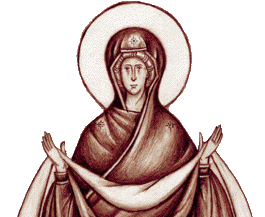
This brings me to the second way in which Christianity performed an end-run around the complex of assumptions that governed ancient thought about marriage. It did so by presenting a model of holiness even higher and more exalted than that of the ascetics: the Theotokos. Her elevation to a central place in Christian life revolutionized how men thought about women, and thereby also how women thought about men and how both thought about marriage.
Mary, of course, had been part of Christian teaching from the beginning. Prayers seeking her intercession have been found on papyri as early as the third century. However, it was only with the rise of the monastic movement that she began to play a central role in Christian devotion. Church Fathers such as St. Athanasius in the East and St. Ambrose in the West held her up as a model of a life of virginity that is devoted to God. The Christological debates of the fifth century gave her further prominence. Particularly through the work of St. Cyril of Alexandria, to identify Mary as the Theotokos, the Mother of God, came to be seen as essential to affirming the full divinity of Christ. It is in the wake of the Council of Ephesus in 431, which codified this decision, that we find the first great flowering of artistic and liturgical devotion to the Theotokos. Homilists emphasized that her purity derived from the presence of God within her womb. According to Theodotus of Ancyra in a homily preached at the Council, “the stainless Virgin was, as it were, burned pure through the approach of the divine and immaterial fire . . . so that henceforth she remained inaccessible to any carnal corruption.” Theodotus also provides the first surviving example of praise directed to her through “greetings” (chairetismoi): “Hail, joy whom we have so long desired; Hail, brightness of the Church; Hail, spiritual fleece of salvation; Hail, stainless mother of holiness.”
The importance of devotion to the Theotokos for relations between the sexes can hardly be exaggerated. Men were not accustomed to looking up to a woman as someone holier, purer, and mightier than they. There were the pagan goddesses, to be sure, but like all the pagan deities they were essentially personifications of aspects of nature. The Virgin Mary was a historical person—one who, by receiving God in her womb, had been “burned pure” and is now forever with her son, where she intercedes for us. Soon tales began to accumulate of the power of her intercessions. Some were of historic significance, such as when she saved Constantinople from the siege of the Avars in 626. Unlike the power of the virgin goddesses Athena and Artemis, hers derived directly from her embrace of her femininity as a mother. She is at once Virgin, Mother, and Queen, one who embodies in herself everything that is both distinctly feminine and worthy of reverence.
It was in learning to revere the Theotokos that men learned to revere women. I cannot enter into this subject fully here, for to do so would require a discussion of courtly love and medieval romance, topics that are well beyond our present scope. Suffice to say that devotion to the Theotokos enabled men to see women, in all their femininity, not only as pleasure-mates or potential mothers, but as fountains of goodness and spiritual wisdom. That is what enabled the slow growth of the kind of love that we call romantic. And it is what has led us today to see in marriage, including its sexual dimension, not only the possibility of pleasure, offspring, and a secure life together, but that of heart-to-heart communion.
Toward Reconciliation
This is a powerful ideal. Yet its very power also makes it dangerous. We are all aware that to seek romance is to court disappointment, and that even when found, romance can prove deceptive. Western literature is full of tales of people like Madame Bovary and Anna Karenina who by seeking romance were led to disaster. The challenge has always been that of how to find heart-to-heart communion, or at least something close to it, without undermining everything that the ancients rightly valued in marriage—its security, its stability, its fecundity, and, not least, its ethical and religious sanction.
It is at this point that the wisdom of the Church’s devotion to the Theotokos becomes most apparent. In honoring the Theotokos, men not only learned to honor women; they also learned to honor chastity. By this I mean not simply the rule of no sex outside of marriage, but the beauty and holiness of one who is pure in body and spirit. As I have argued elsewhere, the traditional rites devoted to the Theotokos, such as the Akathist service sung during Lent, lead one to seek to be chaste and pure as she is—not out of conformity to a rule, but out of devotion to a person. This is important, for it means that when the Church brought the possibility of romance into the world, it did so in a distinct ethical context. Romance is rooted in chastity. To seek romance without honoring chastity is as foolish as to seek to grow fruit in a desert. It is to risk becoming another Anna Karenina, one who by grasping at false and enticing goods ends with nothing.
From this standpoint we can understand, not only the power of the Christian ideal of marriage, but also why it is today so endangered. Modern society has retained the high ideals that Christianity brought into the world—equality of the sexes, romantic love, the yearning for heart-to-heart communion—and removed them from the ascetic and devotional practices that enabled them to be realized. To realize them takes virtues like patience, humility, forgiveness, and chastity, and these can be learned only through the very practices that generated these ideals in the first place. Having abandoned these practices, we are left with the ideals alone apart from the underlying way of life in which they find their natural home. What remains of sexual morality naturally then comes to seem merely a set of rules about permitted and forbidden practices. Such rules can be enough for people whose faith is strong and whose determination does not waver, but the rest of the world, not understanding their purpose, not surprisingly finds them arbitrary and oppressive.
The answer lies in the union of the two views that I distinguished at the outset. We must recover the ancient practices of asceticism and devotion that gave Christian sexual ethics its original power. This means coming to see how the rich and humane form of marriage so well described by Vigen Guroian depends upon the rigorous asceticism and openness to sacrifice insisted upon by Fr. Behr. Each of these views alone is one-sided in ways that are understandable from the standpoint of its own particular focus and concerns. It is only within the unity of the Church that they can be recognized as different aspects of a single whole. Our task today is to recover the fulness of the Christian understanding of marriage in all its richness and complexity.
Free eBook on Contemporary Orthodox Elders: Please Subscribe To Our Newsletter!
Excerpted from the best-selling Orthodox book, Precious Vessels of the Holy Spirit, this eBook will introduce you to the spiritual world of contemporary elders of Greece. Join 3.5K+ subscribers for regular inspiration and to keep up-to-date with our recent videos (interviews with Orthodox thinkers, etc.), new book releases, seasonal sales, and more.